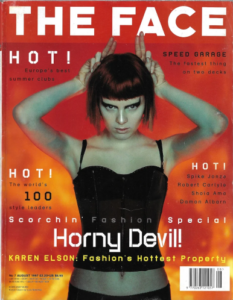
Sheryl Garratt, The Face, August 1997
The summer of love that grew out of the Balearic scene wasn’t as revolutionary as some claim, says Sheryl Garratt
IN THE beginning, there was house. And in the summer of 1988, nightclubbing as we know it was invented. That’s the popular myth, anyway. As with most popular myths there’s an element of truth in it, but it’s hardly the whole story. Revolutions are always far shorter than you think. In England’s Dreaming, the definitive account of British punk, Jon Savage explains how the scene as it first began ended the night the Sex Pistols did their infamous interview with Bill Grundy on December 1, 1976 and the tabloids took over. This was before the Pistols had a record out, before most people knew the music existed. The very moment it went public, the people who created it lost control and it mutated into something else.
The early acid/Balearic scene in London was similar, building via The Project, an after-hours club in a small south London venue in 1987, coalescing at the Shoom parties at the Fitness Centre in the first half of 1988, and finally going overground with the opening of big West End club nights like The Trip at the Astoria on June 4. By July the old clubland pouts had been replaced with smiles, and the temporary suspension of elitist door policies meant that clubs were packed with people from the suburbs who wouldn’t have been allowed in the queue before. The summer of ’88 was an extraordinary time, but it was over almost as soon as it began. When The Trip ended just ten weeks later, people were already talking disparagingly about “acid teds”, flyers and banners proclaimed clubs “an acid-free zone”, and door staff were operating bans on smiley T-shirts and badges
But like punk, the music wasn’t willing to fade that easily. Too many new people had got a taste of dancefloor ecstasy, and scandalised stories in the tabloids only served to create even more converts to the cause. New promoters began to cater to this crowd, holding huge events in the suburbs and countryside. Taking over strange venues, adding funfairs and spectacular decor, breaking the law to dance all night — none of this was new to anyone who had been involved in the Eighties warehouse scene, but suddenly such events were catering not to the few but the many.
It’s easy to forget that house music had been played, even in London clubs, since 1986 when the first tracks started arriving from Chicago on import and Pete Tong released a compilation of house tracks on London Records. Farley “Jackmaster” Funk’s ‘Love Can’t Turn Around’ went top ten in the singles chart in August ’86, while Steve “Silk” Hurley went to number one with ‘Jack Your Body’ in January ’87. By then there was a clear BPM divide in Britain: Scotland liked the faster beats of hi-NRG, DJs like Graeme Park and Mike Pickering were playing house in the North-west and the Midlands, while the South was still fixated on hip hop and rare groove.
But house clubs in Manchester and Nottingham then had none of the frenzy that was to follow, and there were also clubs like Delirium in London, where Noel and Maurice Watson were playing garage and house tracks alongside hip hop, pop and funk, and where Frankie Knuckles came from Chicago for his UK debut (admittedly to a less than ecstatic reception) in 1987. The KLF and Coldcut were already making records, both experimenting with the cut-and-run ethos of hip hop and the possibilities opened up by new sampling technology. Even Norman Jay, one of the London DJs most associated with the retro-funk of rare groove, also played more gospel-influenced garage tunes in his set.
The same is true of party organisers. Danny and Jenni Rampling were new to the game and so brought a refreshing attitude to their Shoom nights, but many other early house promoters were old hands from the Eighties warehouse scene or the suburban soul mafia. The Trip’s Nicky Holloway had already gained a reputation for one-off parties in unusual venues: the dinosaur room at the Natural History Museum, London Zoo, Chislehurst Caves. Graham Ball of Westworld — the team who had brought the idea of funfairs to clubland long before the big outdoor raves — promoted the first “orbital” party off the M25 and helped Jeremy Healy put his brief spell as an Eighties pop star in Haysi Fantayzee behind him and kick-start his career as a house DJ, inviting him to play alongside Norman Jay at Choice.
So clubbing wasn’t invented in 1988. The DJs, promoters, the flyers, the banners, the funfairs, the decor, the battles with the authorities — all that existed before. Promoted by word-of-mouth and with cheap, often badly-designed flyers handed out in West End pubs on the night of the party, there were illegal, all-night events throughout the Eighties in empty office blocks, crumbling warehouses, shop basements and all kinds of other illicit venues. It’s just that some time between the autumn of ’87 and the summer of ’88, they took an E and got faster, brighter, smilier — and this time, far more people knew about it.
House created a church broad enough to allow everyone in; once clubs had been places for people who didn’t fit in anywhere else, who dressed up and celebrated their difference. Now clubs are for everyone, and it’s the people who don’t go dancing at the weekend who can seem like misfits. How that will change when the next short, intense revolution comes around remains to be seen…
© Sheryl Garratt, 1997